


You know that feeling when someone says something kinda rude or annoying, but they say it in this jokey sarcastic way so you can’t really call them out on it? We’ve all been there. Sarcasm can be hilarious when used well, but it can also cross the line and hurt people’s feelings. So where should we draw that line between funny sarcasm and mean sarcasm? Is sarcasm ever really harmless, or does it always have a bit of a sharp edge?
In this article, we’ll explore the ups and downs of sarcasm and try to figure out if it brings more joy or pain into our conversations. We’ll look at some research on sarcasm’s impacts and effects. And we’ll equip you with tips for using sarcasm more skillfully, so you can avoid unintentionally ruffling feathers. Because let’s be honest – we don’t really want to give up sarcasm completely. It can be too much fun! But learning to wield it wisely could make a big difference.
Table of Contents
Is Sarcasm Good or Bad?

Sarcasm gets a bad rap, but used in moderation, it can actually strengthen relationships and bring people together. The key is understanding how and when to use it appropriately. Building Connection Used sparingly among friends or family members who understand your sense of humor, sarcasm can be a way to build closeness through playful teasing and inside jokes. The shared experience of using clever wit and irony to poke fun at life’s annoyances or trivial matters can create a sense of bonding. However, with people you’re not as familiar with, sarcasm may come across as hurtful or toxic.
Diffusing Tension; Wielded judiciously, sarcasm may help alleviate stress or discomfort. Dropping a sarcastic quip to make light of an awkward situation-like encountering your ex at a party – can cut through the tension and provide some comic relief. The release of nervous energy may make the rest of the interaction feel more at ease. Even self-deprecating sarcasm may be a way for some to appear more human and relatable.
Veiled Criticism: Sarcasm is not always used for good. It can be a cowardly way to take jabs at others while maintaining a facade of humor. Sarcasm, used frequently or in excess, often reflects underlying hostility, passive aggression, or poor self-esteem. It may alienate others by creating an environment where no one feels they can be genuine or vulnerable.
Overall, sarcasm in moderation can be good for relationships and releasing tension. But when used irresponsibly, it is more likely to cause harm. The difference comes down to intent and emotional intelligence. Like any language tool, sarcasm itself is neutral; it’s how we choose to wield it that determines whether it’s a force for good or bad. With caring, compassion, and consideration of how our words might affect others, sarcasm can be used to bring people together rather than push them apart.
The Pros of Using Sarcasm: Wit, Humor, and Connection
Sarcasm, when used right, can be an effective way to bring some humor and levity to conversations. It allows you to point out life’s little ironies in a clever, tongue-in-cheek manner.
Witty Banter
Playful teasing and joking around with close friends or family members is a way to strengthen your connection through witty back-and-forth exchanges. Coming up with a quick, ironic retort on the spot shows you’re able to think fast and match wits, creating a sense of playfulness. For example, if your friend says, “Another exciting Friday night at home, huh?” You might quip, “Yep, the party never stops around here.”
Comic Relief
In tense or awkward situations, a dash of sarcasm can lighten the mood and provide comic relief. For instance, if you’re stuck in traffic and running late to an event, you might turn to the friend next to you and say, “Well, at least the view is lovely!” A sarcastic aside like this helps break the tension, giving. you both something to laugh about so you can maintain your sanity.
Inside Jokes That Bond Us
Sharing secret codes and references that only certain people understand is a way to strengthen bonds. An ironic inside joke or callback to an old memory between two long-time friends can reinforce that sense of shared experiences. For example, if you always get together to watch a certain TV show, a sarcastic comment like “How about another rousing episode?” may get a laugh and remind you both of all the good times you’ve spent together.
Of course, sarcasm needs to be used carefully and among people who understand your sense of humor. When wielded irresponsibly, it can come across as meanspirited or damage relationships. But when used to bring friends together through shared laughter, sarcasm can be a highly effective way to create intimacy.
The Cons of Sarcasm: Misunderstandings and Hurt Feelings
Sarcasm is not for everyone. Some people struggle to grasp the subtle ironic or caustic undertones, taking remarks at face value and feeling confused or offended. Even when the intent is playful, sarcasm can come across as mean-spirited or hurtful.
Misunderstandings
When speaking sarcastically, it’s easy to assume that your clever quip or ironic comment will be understood as such. However, sarcasm relies heavily on tone, context, and familiarity, all of which are often lost in translation. Someone who doesn’t know you well may mistake your wry humor for sincerity, leading to confusion, embarrassment, or hurt feelings.
Even with close friends or family, misunderstandings can arise. The more subtle or complex the sarcasm, the more opportunities there are for crossed signals. It’s a good rule of thumb to avoid sarcasm in emotionally charged situations or discussions where clarity is key. Save the irony for less important exchanges.
Hurt Feelings
While sarcasm is usually meant for good fun between friends, it can come across as mean or belittling to others. Comments that mock or make light of someone’s shortcomings, mistakes, or vulnerabilities are rarely received well, even when framed as “just joking.” Repeated sarcastic remarks, especially from someone in a position of power, constitute bullying behavior, which causes psychological harm. Before unleashing your inner sarcasm, consider your relationship with the recipient and how they may interpret your words. If there’s a chance your ironic aside could be misconstrued or do more harm than good, it’s better left unsaid. When in doubt, opt for kindness. Sarcasm is not worth the damage it can do.
When is Sarcasm Appropriate or Inappropriate?

Sarcasm is a double-edged sword. Used sparingly in the right context, it can be an effective way to convey humor or make a point. However, it often fails to translate well in writing and can easily be misinterpreted. As with many rhetorical devices, moderation and consideration of your audience are key.
Among Friends
Playful teasing and good-natured ribbing have their place among close friends and family who understand your sense of humor. Dropping a sarcastic quip into casual conversation with people who know your intent can strengthen your bond through shared laughter and in-jokes. However, be sensitive to others’ moods and receptiveness. Even friends may not always appreciate sarcasm, especially on a bad day.
In Professional Settings
Sarcasm should be used extremely judiciously, if at all, in the workplace or other professional interactions. It can easily be misconstrued as rudeness or condescension, damaging relationships and trust. Written communication in particular lacks the context, nuance, and nonverbal cues that help signal intent. If sarcasm cannot be avoided altogether, at a minimum confine it to one-on-one in- person discussions where you can gauge the other person’s reaction and clarify as needed.
With Strangers
Resist the urge to be sarcastic with people you do not know well. Without an established rapport and understanding, it will ikely just come across as mean-spirited or obnoxious. First impressions matter, so default to courtesy and sincerity in your initial interactions with someone. Once a genuine connection has been built over time, you can consider cautiously testing the waters with some good- natured teasing to see how it’s received. But proceed slowly and look for clear signs that the other person recognizes and appreciates your humor.
Sarcasm is a mode of communication that requires empathy, nuance, and care. When in doubt, it is always safest to avoid sarcasm altogether, especially in writing. A kind word, on the other hand, is rarely misplaced.
Read more

How to Use Sarcasm Effectively

Sarcasm, when used correctly, can be an effective communication tool. However, it needs to be wielded carefully. As a form of ironic or caustic wit, sarcasm relies heavily on context and tone to be understood as intended. Without these cues, your message may be misinterpreted or offend the recipient.
1. Know Your Audience
Make sure the person or group you’re addressing will understand and appreciate the sarcasm. Close friends and family who know your sense of humor are usually good targets. Strangers or professional contacts, not so much. If there’s any doubt, it’s best to avoid using sarcasm altogether.
2. Keep It Light
Use sarcasm in a playful, teasing way rather than a means to hurt or demean. Comments should aim to make others laugh with you, not at them. If your sarcasm has a biting, nasty edge to it, you’ve gone too far.
3. Use Tone and Body Language
Since so much of communication is nonverbal, your tone of voice and body language are key to signaling your ironic intent. A wry smile, eye roll, or overdramatic tone can help ensure your sarcasm is interpreted as good-natured fun rather than hostility. In written communication, emojis and exaggeration can serve a similar purpose.
4. Be Selective
Don’t oversaturate your speech with sarcastic comments. Use them sparingly for the biggest impact and to avoid seeming antagonistic or cynical. Well-timed wit goes a long way.
When used appropriately and with the right audience, sarcasm can be an entertaining way to communicate. But handle with care-without the benefit of tone and context, even the most harmless ironic remark can land with a thud. If you have any doubts about how your sarcasm will be received, it’s often better left unsaid.
Detecting Sarcasm in Conversation
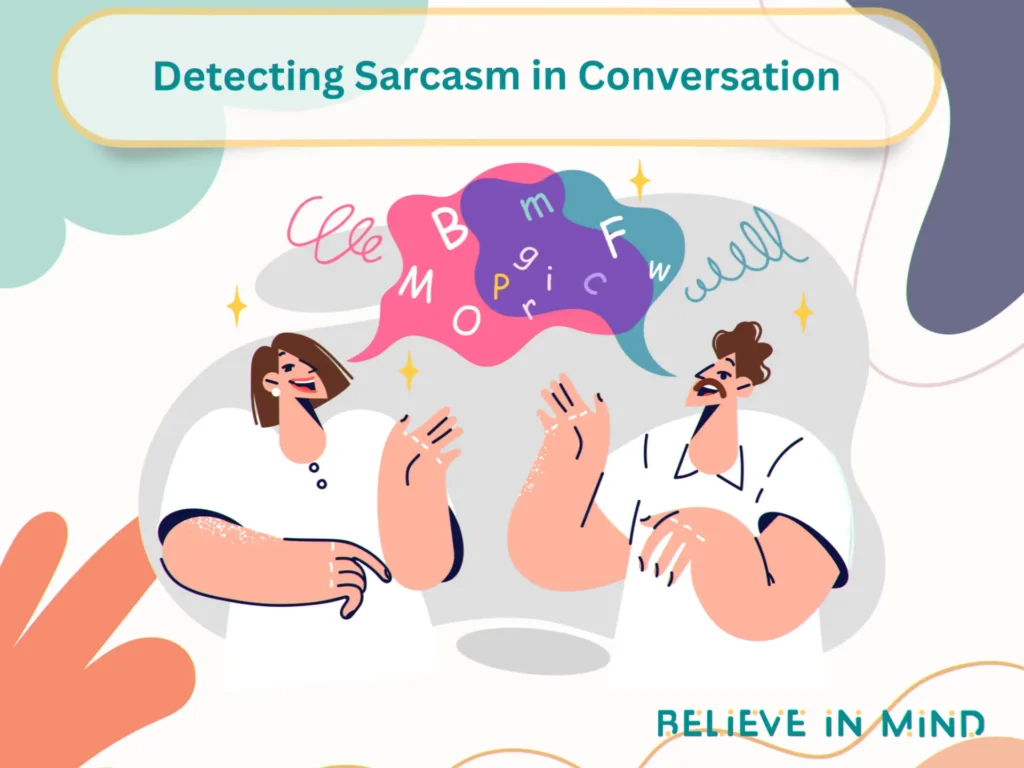
Sarcasm can be tricky to pick up on in everyday discussion. The speaker’s tone, facial expression, and context are all clues to determining if a statement is meant sincerely or sarcastically. Paying close attention to these subtle hints will help you become better at identifying sarcasm.
Listen for a change in tone or inflection. A sarcastic remark is often said in a exaggerated, mocking tone. The speaker may draw out or emphasize certain words in an unnatural way. Their pitch or volume may change for just that sentence. These audible cues signal that the meaning is different than the literal interpretation of the words.
Watch for exaggerated or inconsistent facial expressions. If someone says something with a smirk, eye roll, or wink, they likely don’t mean exactly what they’re saying. Look for facial expressions that don’t match the content or sentiment of the statement. For example, if someone says “Wow, great idea!” with an eye roll, they probably don’t sincerely mean it’s a great idea.
Consider the context. Sarcasm is usually triggered by something in the immediate context or conversation. Think about what was just said or any subtext that could make a statement ironic or sarcastic. Ask yourself if the literal meaning of the words matches the overall discussion and relationship with the speaker. If not, they may have meant the opposite of what they said.
Don’t take statements at face value. People often use sarcasm as a way to say something in an indirect, and sometimes passive aggressive, manner. When engaging in discussion, assume there may be hidden meanings or subtleties to uncover. Look and listen for clues that a statement isn’t quite straightforward to avoid misunderstandings and detect sarcasm. With regular practice, interpreting sarcasm can become second nature.
The ability to understand sarcasm is a subtle social skill that takes conscious effort to develop. But by paying close attention to context, tone, and facial cues, you’ll get better at discerning when someone means the exact opposite of what they’re saying.
Read more

Teaching Kids About Sarcasm
Kids can start grasping basic sarcasm between ages 6 to 8, but full understanding takes until ages 10- 12. As a parent, it’s important to teach your kids about sarcasm in a gradual, age-appropriate way. Around ages 6 to 8, kids can understand obvious sarcastic tones and exaggerated expressions, but the subtle, biting subtext of sarcasm escapes them. Gently point out when you or others are using an exaggerated, ironic tone to convey the opposite meaning. Explain that “Just joking” means the speaker didn’t really mean what they said. Keep examples lighthearted and benign.
Ages 8 to 10, begin explaining how sarcasm is meant to criticize or express annoyance in an indirect, ironic way. Discuss how the speaker’s words literally mean one thing, but their tone and context suggest they intend the opposite. Compare it to exaggeration. Give examples of common sarcastic phrases kids will hear, like “Well isn’t that just great.” Explain the difference between playful teasing and hurtful criticism.
Around ages 10 to 12, kids can grasp sarcasm on par with most adults, understanding subtle, ironic expressions, cultural references in sarcasm, and its use in humor and social commentary. Discuss how sarcasm depends a lot on shared understandings in a group or culture. Explain that sarcasm is often a habit people fall into when they are upset or insecure, and it’s frequently a harmful or unproductive way of communicating. Kids this age can discuss guidelines for using sarcasm appropriately and when it’s better avoided.
The preteen and teen years present the opportunity for rich discussions about the ethical and relational impacts of sarcasm. With your guidance, kids can develop the wisdom and empathy to use sarcasm constructively, or avoid it altogether when it’s likely to cause harm. Understanding sarcasm is a crucial life skill, but learning when not to use it may be even more important.
Curbing Hurtful Sarcastic Remarks
While sarcasm in moderation can be funny and build rapport, hurtful remarks should always be avoided. After all, just because you meant it as a joke doesn’t mean it won’t be taken the wrong way and offend someone.
Before unleashing a sarcastic comment, pause and consider the impact. Ask yourself:
- Will this be interpreted as mean-spirited or belittling?
- Does the person understand my sense of humor?
- Is this an appropriate time and place for sarcasm?
- If there’s any doubt, it’s best to keep the remark to yourself. Your relationships will be better for it.
When you do use sarcasm, express it in an exaggerated, over-the-top way to signal that you intend it as humor, not hostility. Pair it with a smile, laugh, or wink to make your playful intent clear. Self-deprecating sarcasm, where you make fun of yourself in an ironic way, is typically seen as less caustic. But avoid frequent self-deprecation, which can make you seem insecure or like a doormat. With close friends and family, establish that good-natured teasing and sarcasm are part of your rapport. But also express sincere appreciation and set clear boundaries about what’s off limits. Make sure the sarcasm flows both ways and that no one person is always the butt of the joke.
If you’re on the receiving end of a sarcastic barb that stings, speak up. Calmly tell the person their comment hurt you, even if said in jest. Give them a chance to clarify, apologize, and avoid similar remarks in the future. Choose to accept their apology and move on, rather than holding a grudge. And if the hurtful sarcasm continues, spend less time with people who insist on tearing you down to lift themselves up.
Sarcasm and Relationships: Managing a Sarcastic Partner

Sarcasm can be funny or witty when used occasionally, but for those close to you, frequent sarcasm may damage your relationship. If your partner tends towards sarcastic remarks, it’s important to set some ground rules to maintain a healthy balance of humor and sincerity.
Have an open conversation about how their sarcasm makes you feel. Explain that while you appreciate their sense of humor, constant cynical or mocking comments are hurtful and chip away at the foundation of trust and support in your relationship. Ask them to be more mindful of their sarcastic reflex and express themselves in other ways, especially when discussing emotional or sensitive topics. Compromise by agreeing that sarcasm is acceptable in some situations but not others.
It may also help to not engage or escalate the sarcasm. Don’t return their sarcastic barbs, which can turn into a hurtful back-and-forth. Respond sincerely and ask them to clarify if you’re unsure of their meaning or intention. Your sincerity may encourage them to drop the act and have an genuine exchange.
Pay close attention to signs that their sarcasm masks other feelings like anger, insecurity, or annoyance. Ask follow-up questions to better understand the underlying issues and address them through open communication and quality time together. The more openness and intimacy you build in the relationship, the less they may rely on sarcasm as a defense mechanism.
With time and effort, you can achieve a good balance of playful teasing and heartfelt connection. But if hurtful sarcasm remains an ongoing issue, don’t hesitate to revisit the conversation or consider relationship counseling. Your emotional health and happiness should be a top priority. Managing a sarcastic partner requires work, but with understanding, honesty, and compromise, you can build a lasting relationship based on trust rather than cynicism.
Conclusion
In any relationship, communication and understanding are key to working through challenges and disagreements. While sarcasm may seem harmless at times, for many people it can foster feelings of disrespect, hurt and isolation. With patience and a willingness to see each other’s perspectives, sarcastic partners may be able to find more positive and constructive ways to connect and build intimacy.
In conclusion, sarcasm must be used with care and moderation, especially with those close to us. When used too frequently, it can undermine trust and openness in relationships. But through self-awareness, compromise and honest communication, sarcastic tendencies can be reined in and replaced with more sincere expressions of affection, care and humor that serve to deepen bonds with our partners
References
- Self-Deprecating Humor BY MODERATOR ★ · JULY 16, 2019 , A research project from University of Pittsburgh and Children’s Hospital of Pittsburgh of UPMC Division of Adolescent and Young Adult Medicine
- You Can Kick the Sarcastic Habit BY ANNE BOGEL
- Adithya Avvaru, Sanath Vobilisetty, Radhika Mamidi 2020. Detecting Sarcasm in Conversation Context Using Transformer-Based Models. In Proceedings of the Second Workshop on Figurative Language Processing, pages 98–103, Online. Association for Computational Linguistics.
- Think Sarcasm is Funny? Think Again. Is sarcasm really just hostility disguised as humor?. Posted June 26, 2012 by Clifford N. Lazarus Ph.D.

Let’s boost your self-growth with Believe in Mind.
Interested in self-reflection tips, learning hacks, and knowing ways to calm down your mind? We offer you the best content which you have been looking for.