

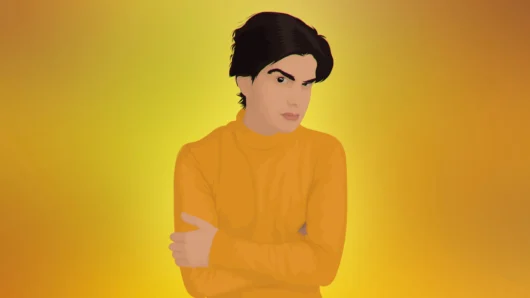
Last night, everything was fine. Nothing was wrong. There were no real problems to deal with. But somehow, my mind still found one.
It started with a simple thought:
“What if something goes wrong?”
It’s harmless at first. But then your mind starts to fill in the gaps:
- What if I fail?
- What if I lose everything?
- What if this never works out?
Nothing had actually happened. But it already felt like something had. This is how catastrophizing works. It doesn’t wait for real problems. It creates them.
One thought leads to another, assumptions build on each other, and suddenly you’re imagining worst-case scenarios you haven’t even experienced.
And somehow… it already feels real. It’s not just about big, obvious problems. Catastrophizing can show up in everyday moments that seem perfectly normal.
Imagine this: you’re having a good day; maybe you’re hanging out with friends, enjoying a meal, or just relaxing at home. Everything feels fine. And then a thought pops up:
“I shouldn’t be this happy. What if something goes wrong?”
It’s a small, almost invisible thought. But suddenly, it starts to grow. One “what if” leads to another, and before you know it, your mind is imagining all the ways things could fall apart.
That’s what this pattern feels like. It’s not just about expecting the worst; it’s about feeling like something bad is always around the corner, even when everything seems okay.
Table of Contents
This Happens More Than You Think.
Because catastrophizing doesn’t just show up in big, obvious problems. Most of the time, it sneaks into the small, everyday moments. A text you haven’t heard back from. A tiny mistake at work. Feeling unsure about plans or what might happen next. On the surface, these are minor things, but your mind can quietly turn them into a full-blown worst-case story.
The strange part is how automatic it feels. It’s like your brain does it without asking; one thought pops up, and before you know it, your mind has jumped ahead, imagined all the possible ways things could go wrong, and made it feel real.
You might think you’re the only one who spirals like this, but almost everyone does at some point. Some people just notice it more, or it escalates faster, but the pattern itself is completely normal. The goal isn’t to stop the thoughts from happening; it’s to understand that this is your mind doing what it’s wired to do and that noticing it is the first step toward taking back control.
Because, It Feels Like You’re Preparing… But you’re pre-suffering. It feels like you’re being careful. Responsible. Like you’re staying one step ahead of whatever might go wrong. And at first, that thought feels smart. You tell yourself, “I’m just preparing.”
But take a closer look. Notice how your chest tightens. Your stomach knots. Your mind keeps running through all the “what ifs.” The thing is… nothing has happened yet. You’re living through problems that haven’t even arrived. Arguments you haven’t had, mistakes you haven’t made, losses that aren’t real.
And it costs you. You feel drained, even if you haven’t lifted a finger. Tension creeps into your shoulders. Your focus disappears from the moment you’re actually in. That laughter, that coffee, that quiet afternoon—they’re already shadowed by thoughts of disaster. You’re not preparing. You’re pre-suffering.
The irony is that it feels like control. But the more you mentally rehearse every possible problem, the less control you actually have. Instead of feeling ready, you feel stuck. Worn out. Pulled forward into fears that haven’t happened, leaving the present slipping right through your fingers.
Because it’s not just the thought; it’s how quickly you believe it. Your Mind Is Trying to Protect You. Here’s the surprising truth: catastrophizing isn’t a flaw. It isn’t a sign that you’re weak, irresponsible, or “overly negative.” In fact, it’s a survival mechanism. Your brain is wired to detect danger, predict threats, and keep you safe. That’s why, in the moment, it feels so automatic. You don’t consciously decide to imagine the worst; your mind does it on its own. One tiny thought, one small signal, and suddenly a whole chain of “what ifs” starts spinning.
But there’s a problem: your brain is using an outdated set of rules. These rules evolved to protect our ancestors from immediate, life-threatening dangers: wild animals, harsh weather, and hostile humans. In those situations, scanning for threats, imagining worst-case outcomes, and preparing for danger could literally save your life. Now, most of the “threats” your brain responds to are far less urgent: a text you haven’t heard back from, a minor mistake at work, feeling uncertain about plans, or imagining how someone might react in a conversation. Your mind treats these everyday situations like life-or-death threats.
That’s why it feels automatic. You don’t have to consciously imagine every possible negative outcome; your mind does it for you, often faster than you can notice. One small thought pops up, and before you know it, your mind has built a detailed story. Assumptions stack on assumptions. Emotions rise. Your body tenses, your heart beats a little faster, and your focus slips from the moment you’re actually living. Suddenly, what started as a minor worry becomes an entire scenario of problems that don’t exist.
This protective system is incredibly efficient; it’s just working in the wrong context. Your brain is doing its job too well, scanning constantly for danger, predicting threats, and alerting you to possibilities that might go wrong. And the more you try to “stay ahead” by thinking through all these potential outcomes, the more exhausted you become. You end up mentally rehearsing problems that haven’t happened yet, and your mind convinces you they might actually occur.
Understanding this is powerful. Once you realize that your brain is simply following its ancient wiring, you can start seeing catastrophizing for what it is: an overactive alarm system. You don’t need to fight it, beat it, or eliminate it entirely. Instead, you can learn to notice when your brain is overreacting, giving yourself the space to step back before the story takes over your emotions.
And here’s the best part: you’re not unusual for experiencing this. Nearly everyone experiences this kind of overactive threat detection at some point, even people who appear calm and in control. Some people notice it more, some less, but the pattern itself is human. Recognizing it, understanding it, and learning to step back are the first steps toward changing the way your mind responds.
Read more

But It Gets One Thing Wrong
Here’s the tricky part: your brain isn’t lying to you, but it’s misinterpreting the situation. It treats possibilities as probabilities.
Think about it. When your mind whispers, “What if this goes wrong? It’s not just imagining a possibility; it starts acting as if that outcome is inevitable. Suddenly, the “what if” feels like a “what is.” Your chest tightens, your thoughts race, and your mind convinces you that disaster is already around the corner.
But the reality is different. Most of the things you imagine will never happen. They’re false alarms, your brain reacting to a perceived threat, not an actual one. And yet, the feelings it creates are real. The anxiety, the tension, the racing heart—they all feel true, and that makes it even harder to separate your mind’s story from reality.
This is the key idea: feelings aren’t facts. Just because your mind says something is about to go wrong doesn’t mean it’s true. Emotions can be convincing, but they are not proof. Your mind can generate scenarios, predictions, and fears that feel urgent and unavoidable and still be completely disconnected from what’s actually happening.
Once you realize this, a small shift becomes possible. You can start noticing the difference between the following:
- The story your mind is telling
- The reality of what’s actually happening
And that awareness is powerful. It doesn’t mean the thoughts will disappear, but it gives you the space to respond instead of react, to choose your attention rather than letting your mind dictate it.
The best part? The moment to notice it isn’t somewhere far away; it happens right at the very beginning, the instant the thought appears. That tiny, almost invisible moment is where you can catch it before it spirals out of control.
You don’t need to fight the thought or push it away. All you need to do is observe: “Ah, there’s that thought again.” That small pause, the briefest second, creates a turning point. Do you let the spiral continue, or do you step back and see it for what it is?
This is the micro-moment where power shifts. Your mind is no longer dragging you through imagined problems. Instead, you’re noticing patterns, seeing what triggers them, and gradually reclaiming space in your day. Each time you catch it early, you gain a little more calm, presence, and freedom from the story your mind wants to tell.
Instead of Following the Thought…
Now that you’ve noticed the thought before it spirals, the next step isn’t trying to stop it. You don’t need to fight it, force it away, or convince yourself it shouldn’t exist. That only gives it more power.
Instead, try something surprisingly simple:
1. Gently Question It
When your mind whispers, “What if this goes wrong?” pause and ask:
“Is this a fact, or is it a fear?”
That small question is like holding up a mirror to your thought. It doesn’t argue; it doesn’t push back; it just shines a light. And in that light, you start to notice something important: these thoughts are often stories, not reality. They feel urgent and convincing, but they aren’t facts.
This is the moment where the shift begins from believing every thought to observing them without automatically reacting. You’re no longer dragged along by every “what if.” You’re seeing the thought, feeling the tension it brings, and making a choice: does this deserve my attention, or can it pass by like a cloud?
Over time, this practice changes how your mind behaves. The thoughts still come; they always will, but you start responding differently. Instead of spiraling, you pause. Instead of exhausting yourself with imagined disasters, you reclaim your focus and your energy. And little by little, those “what if” scenarios lose their grip over your emotions.
2. Come Back to What’s Actually Happening
Once you’ve noticed the thought and questioned it, the next step is to bring yourself back to the present moment. It’s easy to get lost in imagined futures, your mind racing through every “what if” scenario, but the present is the only place where reality actually exists.
Start by grounding yourself in the here and now. Look around you. What can you see, hear, or feel? Pay attention to your body: the weight of your feet on the floor, your hands on your lap, and the rhythm of your breath. Even a few seconds of noticing your surroundings can pull you out of the spiral.
Ask yourself a simple question: “Right now, am I safe?” Usually, the answer is yes. That alone is enough to create a pause between your thought and your reaction. It reminds you that, despite the story your mind is telling, the danger isn’t real in this moment.
This doesn’t erase your thoughts; they’ll still pop up. But by practicing grounding, you start reclaiming your attention from imagined disasters. You create space to respond rather than react. You notice the difference between what’s actually happening and what your mind is predicting.
Over time, this habit builds resilience. You learn that the mind can create elaborate scenarios that feel real, but you don’t have to be swept along. By pulling your focus back to the present, you can enjoy moments fully, even when your brain tries to warn you about every possible future problem.
3. Let Go of Trying to Eliminate Thoughts
One of the biggest misconceptions about handling anxious or negative thinking is that you have to get rid of every thought. That’s impossible, and trying only makes it worse. Thoughts will come. They always do. And that’s okay.
The real shift happens when you stop feeling like you need to control your mind. You don’t have to follow every “what if” scenario. You don’t have to believe every thought that pops into your head. You simply notice them, acknowledge them, and let them pass.
Think of it like clouds in the sky. Some are dark, some are light, some are big, and some are small, but none of them define the sky itself. Your thoughts are the clouds; your mind is the sky. You can watch them come and go without getting pulled into every storm they suggest.
This mindset doesn’t mean your thoughts disappear. They’ll still appear, sometimes vividly, sometimes over and over. But each time you practice noticing without following, you’re strengthening a new habit: you respond to thoughts rather than being controlled by them.
The shift is subtle but powerful. You start to realize:
- You don’t need to follow all thoughts to the end of their story.
- You don’t need to believe everything your mind presents as fact.
Still those thoughts keep hauting try these…,
How to Handle the Thoughts Without Letting Them Control You
By now, you’ve noticed the thoughts, questioned them, and pulled your attention back to the present. That’s huge progress. But the reality is thoughts will still show up. Some days more than others. And that’s okay.
The next step isn’t about forcing them out or “fixing” your mind. It’s about gently handling them, so they stop running your day. Over time, this actually reduces their frequency and intensity, without ever turning into a battle.
Here’s how you can do it in ways that feel natural and human:
1. Name the Pattern
When a spiraling thought appears, quietly say to yourself:
“Ah, this is my mind catastrophizing again.”
Just naming it gives you a little distance. It’s like stepping outside of the storm for a second. You’re not fighting it; you’re simply noticing it’s happening. And that noticing itself begins to loosen the grip of the thought.
2. Ground Yourself in the Here and Now
Bring your attention to the present:
- Notice your breath.
- Feel the weight of your body against the chair or floor.
- Take in the sights, sounds, and sensations around you.
Even a few seconds of grounding pulls your mind out of the imagined future and back to what’s real. And when your mind realizes the “threat” isn’t actually happening, the tension naturally eases.
3. Question the Story Gently
When you catch yourself spinning a “what if” scenario, try asking:
- “Is this a fact or a fear?”
- “Do I have real evidence that this will happen?”
Notice the difference between the story your mind tells and the reality around you. You don’t have to argue or convince yourself the goal isn’t to prove the thought wrong, just to observe it without automatically believing it.
4. Redirect Your Attention, Don’t Suppress
Instead of pushing the thought away (which often backfires), focus on something else:
- Engage in a small, absorbing task
- Go for a walk, stretch, or move your body
- Call or connect with someone you trust
This isn’t distraction for distraction’s sake; it’s training your mind to shift focus naturally, giving those thoughts less energy to grow.
5. Build Gentle, Daily Habits
Over time, small, consistent practices make a big difference:
- Journaling worries and then closing the page
- A few minutes of mindfulness or meditation each day
- Breathing exercises to calm your nervous system
These habits strengthen your ability to notice and handle thoughts before they spiral, helping you gradually feel more in control not by forcing your mind but by guiding it with awareness and care.
The key takeaway: you don’t need to eliminate every thought. You don’t need to control your mind perfectly. You simply practice noticing, questioning, grounding, and redirecting, so the thoughts come without dragging you along. The more you do this, the more freedom and calm you reclaim in your day.
Final Thought: The Life You Almost Missed
Remember how it all started one simple thought creeping in: “What if something goes wrong?” That small idea spun into a web of “what ifs,” pulling attention away from the moment you were actually living.
Think about it for a second: how many moments have slipped away like that? A conversation, a laugh, a quiet afternoon… all overshadowed by imagined futures that haven’t even happened. It’s easy to forget, but life is happening right now. Not in the what-ifs, not in the imagined disasters, right here, in this moment.
You’ve learned something important through this journey. You’ve seen that catastrophizing is normal. You’ve practiced noticing thoughts before they spiral, questioning their stories, and grounding yourself in reality. You’ve started redirecting attention gently, reclaiming energy, and building habits that make space for calm and presence.
And that’s the point: life keeps moving, even when your mind tries to warn you about everything that could go wrong. The more you practice awareness, the more those “what if” scenarios lose their power, and the more you can actually live the moments that matter.
So take a breath. Look around. Notice the people, sights, and sounds that are here right now. The thoughts will come; they always will, but you don’t have to let them steal the day.
This is the life you almost missed. And now, with awareness and practice, it’s yours to fully experience.
Further Readings
- Seligman, M. E. P. (1991). Learned optimism: How to change your mind and your life. Alfred A. Knopf.
Note: This is the seminal work on “Explanatory Styles”—the way we explain bad events to ourselves. - The Gap and the Gain: The High Achievers’ Guide to Happiness, Confidence, and Success By Dan Sullivan and Benjamin P. Hardy
- How to avoid catastrophic thinking What you can do when you believe everything is terrible. June 1, 2025 By Matthew Solan, Former Executive Editor, Harvard Men’s Health Watch

Let’s boost your self-growth with Believe in Mind.
Interested in self-reflection tips, learning hacks, and knowing ways to calm down your mind? We offer you the best content which you have been looking for.