

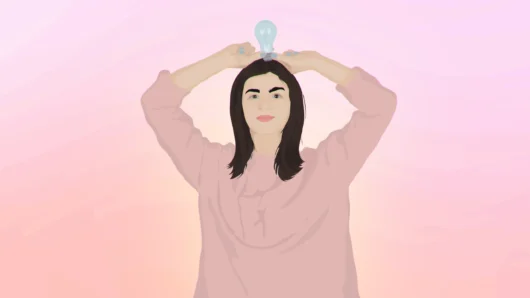
There are days when your mind feels full of ideas… and days when it feels completely empty.
Have you ever sat down to create and felt like your mind was a blank canvas? Not because you’re not creative, but because your mind just isn’t in that space yet.
Most people assume creativity works like a switch. Either it’s there or it’s not. But in reality, it works more like a muscle. If you don’t use it, it feels slow. If you use it regularly, it becomes easier.
And the good news is, you don’t need anything complicated to start.
You don’t need a perfect plan. You don’t need special tools. And you definitely don’t need to wait for inspiration to show up.
Sometimes, all it takes is a small exercise. Something simple that gets your mind moving, even just a little.
That’s what this article is about. These are not big techniques or structured methods. They’re small, everyday exercises you can try whenever you have a few minutes. Some might feel almost too simple at first. But that’s precisely why they work.
You don’t have to try everything. Just pick one, give it a few minutes, and see what happens. This is a little push that I hope can open your mind.
Table of Contents
1. Start with Small Creative Warm-Ups
Before expecting big ideas, it helps to warm up your thinking. We don’t expect our body to perform without a warm-up. But when it comes to creativity, we often sit down and expect something wonderful to happen instantly. That pressure can actually block your thinking before it even starts.
Instead of forcing yourself to come up with something “excellent,” start small. Give your mind something simple and low-pressure to work with. These exercises are not about results. They’re about getting your brain into motion.
Write 5 Random Ideas
This is one of the simplest ways to get started. Take a few minutes and write down any five ideas that come to your mind. Don’t stop to judge them. Don’t try to improve them. Just write.
Your ideas could be:
- a business idea that makes no sense
- a random story plot
- a strange product
- or even something completely silly
For example:
- a café where people sit in silence
- a mobile app that reminds you to take breaks
- a story about a person who can hear other people’s thoughts
At first, it might feel like you’re forcing it. That’s normal. But after a few ideas, your mind usually starts to loosen up. One idea leads to another, and suddenly it doesn’t feel as difficult.
The goal here is not to come up with something brilliant. It’s to shift your mind from “thinking” to “creating.”
Describe an Everyday Object in 3 Different Ways
This exercise trains you to see things from different perspectives. Pick any object around you. Something simple, like a cup, your phone, or a bag.
Now describe it in three different ways:
- Simple description
Just explain what it is.
Example: “A glass cup used for drinking water.” - Creative or imaginative description
Add personality or imagination.
Example: “A transparent container that holds small moments of refreshment.” - From a different perspective
Try describing it like a child, an artist, or even someone who has never seen it before.
Example: “A shiny thing that holds water like a tiny pond.”
This might seem small, but it trains your brain to move beyond the obvious. And that ability is what helps you think more creatively in bigger situations.
Rename Everyday Things
This one is playful, and that’s why it works. Look around you and pick a few common objects. Now give them completely new names based on what they do or how they feel.
For example:
- a fan becomes “air spinner”
- A notebook becomes a “thought catcher.”
- headphones become “sound bubble.”
At first, you might feel like this is too simple or even a bit childish. But that’s actually the point. When you rename things, you break away from fixed meanings. You start focusing on function, feeling, and interpretation instead of labels. This kind of flexible thinking is a big part of creativity.
These exercises are not meant to impress anyone. They’re meant to wake your mind up.
On days when you feel stuck, you don’t need to do something big. You just need to start somewhere small. And once your thinking begins to move, creativity usually follows.
2. Use Writing as a Daily Creativity Tool
Writing is one of the easiest ways to unlock creativity, but not in the way most people think.
You don’t need to be a “good writer” for this to work. In fact, this has nothing to do with writing something perfect or polished. It’s simply a way to get your thoughts out of your head and onto something you can see.
When thoughts stay in your mind, they feel unclear and overwhelming. But once you start writing, they begin to take shape. You notice patterns, ideas connect, and things become easier to understand.
Think of writing here as a tool for thinking, not just expressing.
Freewriting
Freewriting is one of the simplest and most effective exercises you can try. Set a timer for 5 to 10 minutes and start writing without stopping. Don’t worry about grammar, structure, or even making sense. Just keep your pen moving or your fingers typing.
If you run out of things to say, write something like “I don’t know what to write” until a new thought comes. The important thing is not to stop.
At first, your writing might feel messy or repetitive. But after a while, something interesting usually happens. Your thoughts start to flow more naturally, and ideas begin to appear without forcing them.
This works because you’re turning off your inner critic, at least for a few minutes, and giving your mind space to think freely.
Rewrite a Simple Idea in Different Styles
This exercise helps you stretch your thinking in a creative way. Take a simple idea and try expressing it in different styles. For example, let’s say your idea is, “Drinking water is important.”
Now rewrite it in different ways:
- In a formal tone: “Maintaining proper hydration is essential for overall health.”
- In a casual tone: “Just drink some water; you’ll feel better.”
- In a creative way: “Your body quietly asks for water long before you notice it.”
You can even try writing it like this:
- a social media post
- a short story
- a piece of advice
This exercise shows you that one idea can be expressed in many different ways. And once you realize that, your thinking becomes more flexible.
Read more

Explain Something as if Teaching a Child.
This approach is a powerful way to simplify your thinking. Pick any concept; it could be something you’re learning, working on, or even a basic idea. Now try to explain it in the simplest way possible, as if you’re talking to a child.
For example, instead of saying:
“Creativity is the ability to generate novel and useful ideas,”
You might say, “Creativity is when you think of new ways to do things or come up with ideas that didn’t exist before.”
When you simplify something, you’re forced to truly understand it. You remove unnecessary complexity and focus on what really matters.
This not only improves your clarity but also helps you see ideas more clearly.
Writing doesn’t have to be complicated to be useful. Even a few minutes of writing like this can help you clear your mind, explore ideas, and think more freely. Over time, it becomes less of a task and more of a habit that supports your creativity naturally.
Creativity isn’t a light switch — it’s a muscle.
3. Train Your Observation Skills
Sometimes the problem isn’t that you can’t create. It’s that your mind doesn’t have enough to work with. Creativity doesn’t come only from thinking. It also comes from what you notice, what you experience, and what you pay attention to in everyday life.
When you start observing more carefully, even ordinary things become intriguing. And those small details often turn into ideas later. This is less about doing something and more about learning to see differently.
Pick One Place and Observe for 5 Minutes
Choose a place where you are right now. It could be your room, a bus stop, a classroom, or even a quiet corner outside. Now spend five minutes just observing.
Look at things you normally ignore:
- the way light falls on objects
- small movements around you
- sounds in the background
- patterns, colors, textures
Don’t rush this. At first, it might feel like nothing is happening. But if you stay with it, you’ll start noticing details you usually miss. For example, you might notice how a fan creates a steady rhythm of sound or how people move differently depending on where they are.
This exercise helps your mind slow down and become more aware.
List Things Most People Ignore
This builds on observation but makes it more active. Take a few minutes and write down things that people usually don’t pay attention to.
It could be:
- the sound of footsteps in a hallway
- how someone pauses before answering a question
- the way a cup leaves a faint mark on a table
These are small things, but they add depth to your thinking. When you start noticing what others overlook, you begin to see the world in a more detailed and unique way. That’s where many creative ideas come from.
Describe a Scene Like a Storyteller
Now take what you observe and turn it into something expressive. Look at a simple scene around you and describe it as if you’re telling a story.
For example, instead of saying:
“People are sitting in a café,”
- You might say, “The café is filled with quiet conversations, the soft clinking of cups, and people lost in their own thoughts.”
- You don’t have to be perfect or poetic. Just try to bring the scene to life in your own way.
This exercise connects observation with expression. You’re not just seeing things; you’re learning how to communicate them. This section is really about one simple shift: pay more attention. The more you notice, the more your mind has to work with.
4. Play with Imagination
Not every creative moment needs a purpose. A lot of the time, we approach creativity with a goal in mind. We want to solve something, finish something, or come up with something useful. But that pressure can make thinking feel heavy.
Sometimes, the best thing you can do is stop trying to be productive and just play with ideas. When you allow your mind to explore without limits, it becomes more flexible. And that flexibility often leads to better, more original thinking later.
Imagine Impossible Scenarios
This is one of the easiest ways to stretch your imagination. Ask yourself a simple “what if” question that doesn’t have to make sense.
For example:
- What if gravity disappeared for one hour every day?
- What if people could hear each other’s thoughts?
- What if time moved faster in some places and slower in others?
You don’t need to solve anything. Just explore the idea. Think about what would happen, how people would react, and what changes it would create. The more you explore, the more your mind moves beyond normal boundaries.
This exercise helps you break out of realistic thinking and enter a more open space.
Create Short Fictional Situations
You don’t need to write a full story to be creative. Just create small, simple situations in your mind or on paper.
For example:
- A person receives a message meant for someone else
- Two strangers are forced to work together unexpectedly
- Someone wakes up in a place they’ve never seen before
You can keep it short, even just a few lines.
The goal is not to create something perfect but to practice building ideas. Over time, this becomes easier and more natural.
Turn Real-Life Situations into Stories
This is where imagination connects with reality. Take something ordinary from your daily life and imagine it as a story.
For example:
- a conversation you overheard
- a moment you experienced during the day
- a place you visited
Now add a twist:
- What if something unexpected happened?
- What if there was a hidden reason behind it?
A simple moment can become something much more interesting when you add imagination to it. For example, a normal bus ride could turn into a story about two people whose lives quietly intersect for a brief moment.
5. Work with Simple Creative Challenges
Sometimes the hardest part of being creative is not lack of ideas but lack of direction. You sit down and think, “What should I do?” and your mind goes blank. In moments like this, having a small challenge can help guide your thinking without overwhelming you.
These challenges are not tests. They are more like mini games for your brain. They give you just enough structure to start but still leave room for creativity.
Create Something Using Only 3 Words
This is a fun way to force simplicity. Pick any idea and try to express it using only three words.
For example:
- “Time changes everything.”
- “Ideas become reality.”
- “Lost but learning”
You can also turn it into creative thinking:
- “Flying city concept”
- “Silent conversation story”
- “Forgotten memory returns”
The limitation makes your brain focus on what truly matters. Instead of overthinking, you start selecting words more carefully. This often leads to surprisingly powerful ideas.
Draw or Explain Something in 1 Minute
Set a timer for one minute and challenge yourself to explain or sketch an idea as quickly as possible. It doesn’t matter if it’s perfect. The goal is speed, not accuracy.
You might:
- quickly draw a concept map
- sketch a simple idea visually
- or explain a thought in a rushed but clear way
For example, you could try explaining “creativity” in one minute without stopping. At first, it may feel messy. But this exercise trains your brain to think faster and more instinctively, without over-editing every idea.
Simplify a Complex Idea
Take something complicated and break it down into its simplest form.
It could be:
- a concept you learned
- an idea from work or study
- or even something you read online
Now try to explain it in the simplest possible way.
For example, instead of a long explanation about creativity, you might say, “Creativity is finding new ways to see things.” This exercise helps you remove unnecessary complexity. And when your thinking becomes simpler, it often becomes clearer and more creative.
These small challenges work because they remove hesitation. You don’t need to plan, prepare, or wait for inspiration. You just start. And once you start, your mind naturally begins to engage. That’s what makes them powerful—they turn creativity into something immediate, not something distant.
6. Use Your Senses to Trigger Ideas
When your mind feels blocked, the problem is not always thinking. Sometimes it’s disconnection. You are trying to create ideas from your head alone, but creativity doesn’t only live in thoughts. It also comes from what you see, hear, and feel in the world around you.
Your senses are constantly collecting information. When you start paying attention to them, they naturally become triggers for ideas. This is about shifting from thinking about creativity to experiencing it.
Listen to a Sound and Imagine a Scene
Close your eyes or focus on a single sound around you.
It could be:
- rain falling
- a fan spinning
- people talking in the distance
- traffic noise
Now don’t just hear it — imagine a scene behind it.
For example:
- The sound of rain might become a quiet night in a small village.
- Traffic noise might become a busy city where thousands of lives are moving at once.
You are not trying to be accurate. You are building a story from sound. This exercise trains your brain to connect abstract input (sound) with imagination, which is a powerful creative skill.
Look at an Image and Create a Story
Take any image—it could be from your phone, a book, or something you see online.
Now ask yourself:
- What is happening here?
- What happened before this moment?
- What might happen next?
Even a simple image can turn into a story. For example, a picture of a person sitting alone on a bench could become:
- a story about waiting for someone who never came
- or someone who is enjoying a rare moment of peace
- or someone who is about to make a life-changing decision
The image becomes a starting point, not the final answer. This helps your mind build narrative thinking from visual input.
Touch or Interact with Objects and Describe Them Creatively
Pick any object near you and interact with it consciously.
It could be:
- a pen
- a cup
- a book
- your phone
Now focus on how it feels, not just what it is.
Ask yourself:
- What does it feel like in your hand?
- What does it remind me of?
- If it had a personality, what would it be like?
For example, a pen is not just a writing tool. It could feel like:
- a “quiet thinker that records thoughts”
- or a “bridge between ideas and reality”
This exercise helps you move beyond functional thinking and into descriptive, imaginative thinking.
Creativity doesn’t only happen in your head. It starts with your connection to the world around you. The more you use your senses intentionally, the more natural ideas will begin to appear.
Final Thought
Creativity is not something you wait for—it’s something you build through small, consistent actions.
You don’t need perfect ideas, special talent, or the “right moment” to begin. Most creative thinking starts in ordinary moments, when you simply allow yourself to explore, notice, write, imagine, and play without pressure.
The exercises in this article are not meant to transform you overnight. Instead, they slowly train your mind to become more flexible, more observant, and more open to ideas. Over time, this daily practice makes creativity feel less like a struggle and more like a natural part of how you think.
If you stay consistent, even in small ways, you’ll begin to notice something important—ideas don’t disappear. They were always there. You’re just learning how to see them more clearly.
Further Readings for the Readers
- ScienceDirect (2014). SCAMPER-based Creativity Training and Its Effects on Students
https://www.sciencedirect.com/science/article/pii/S1871187114000431 - Springer (Journal of Cognitive Enhancement). Cognitive-Based Creativity Training and Idea Generation
https://link.springer.com/article/10.1007/s41465-016-0002-3 - WeWork Ideas (2021). Creativity Exercises for Professional and Personal Growth
https://www.wework.com/ideas/professional-development/creativity-culture/creativity-exercises
“Pick one exercise today and notice how your thinking shifts. BEST OF LUCK!

Let’s boost your self-growth with Believe in Mind.
Interested in self-reflection tips, learning hacks, and knowing ways to calm down your mind? We offer you the best content which you have been looking for.