

Have you ever felt like someone is constantly trying to control you, making you feel guilty or obligated to do things you don’t want to do? If so, you may be dealing with a manipulator. Manipulators are individuals who use subtle and deceptive tactics to gain power and control over others. While it may seem easier to ignore their behavior, doing so can have serious consequences for your mental, emotional, and even physical well-being.
In this article, we will explore the art of manipulation, unmask the red flags of manipulative behavior, and discuss the dangers of ignoring such individuals. We will also provide strategies for self-protection and explore when seeking professional intervention becomes necessary.
Table of Contents
The Art of Manipulation
In the realm of human interactions, there exists a shadowy world where individuals known as manipulators operate. These individuals are masters of deception, employing subtle and covert tactics to exert control over others. Their manipulative strategies are designed to achieve their own selfish desires and interests, often at the expense of others’ well-being.
Manipulators possess an uncanny ability to read people, discerning their vulnerabilities and weaknesses with remarkable precision. They exploit these vulnerabilities like a skilled hunter, preying on the emotions and insecurities of their victims. Their calculated approach involves a mix of flattery, guilt-tripping, and emotional manipulation, each tactic carefully chosen to achieve their desired outcomes.
Flattery, a manipulator’s offensive charm, involves showering their target with excessive praise and admiration. This calculated display of affection serves to lower the target’s defenses, making them more susceptible to the manipulator’s influence. Guilt-tripping, on the other hand, plays on the target’s sense of obligation and responsibility. Manipulators skillfully evoke feelings of guilt and indebtedness, making their targets feel compelled to comply with their demands.
Emotional manipulation, perhaps the most insidious tactic, involves playing on the target’s emotions to achieve compliance. Manipulators use a range of techniques, such as sympathy, anger, or fear, to cloud their target’s judgment and make them more vulnerable to suggestion.
The art of manipulation is a dangerous game, with potentially devastating consequences for those who fall victim to its deceptive allure. Understanding the tactics employed by manipulators is the first step towards protecting oneself from their harmful influence.
Unmasking the Manipulator: Spotting the Red Flags
Manipulators are not always easy to spot, but there are certain red flags that can help you identify them. One of the most common signs of a manipulator is a consistent pattern of deceptive or dishonest behavior. This could include things like lying, cheating, or making false promises. Manipulators are often very good at lying and may even seem believable at first, but if you pay close attention, you may start to notice inconsistencies in their stories or behavior.
Another red flag to look for is a lack of empathy or concern for others. Manipulators often seem to be completely indifferent to the feelings of others and may even take pleasure in causing pain or discomfort. They may also be very critical or judgmental of others, and they may try to make you feel bad about yourself in order to gain control over you.
A sense of entitlement is another common trait of manipulators. They may believe that they deserve special treatment or privileges, and they may be very demanding or pushy in order to get what they want. They may also be very jealous or possessive, and they may try to control your behavior or isolate you from your friends and family.
Finally, manipulators often use flattery, charm, intimidation, or coercion to get what they want. They may be very charming and charismatic at first, but once they have gained your trust, they may start to use more manipulative tactics. They may try to make you feel guilty or obligated to do something, or they may threaten you or punish you if you don’t cooperate.
The Perils of Ignoring Manipulation: A Path to Self-Destruction
Ignoring manipulation can have severe and devastating consequences. It can lead to a gradual erosion of self-esteem and confidence, leaving victims feeling worthless and incapable. This loss of self-belief can make it challenging to make decisions, take action, or stand up for oneself, further perpetuating the cycle of manipulation.
Isolation is another common consequence of ignoring manipulation. Manipulators often isolate their victims by discouraging or preventing them from forming close relationships with others. This can leave victims feeling alone, without support, and unable to confide in anyone about their situation. Isolation can also make it more difficult to seek help or escape a manipulative relationship.
Financial problems are another potential consequence of ignoring manipulation. Manipulators may exploit their victims financially, pressuring them to lend money, make unwise investments, or even steal. This can lead to significant financial losses, debt, and even bankruptcy.
Physical and emotional health problems are also common among those who ignore manipulation. The constant stress of being manipulated can take a toll on both the body and the mind. Victims may experience headaches, stomachaches, insomnia, anxiety, and depression. In severe cases, manipulation can even lead to post-traumatic stress disorder (PTSD).
In the most extreme cases, ignoring manipulation can even lead to death. This can occur if the manipulator encourages the victim to engage in dangerous or self-destructive behavior, such as substance abuse, risky sensual behavior, or even suicide.
Ignoring manipulation is never the answer. If you are being manipulated, it is important to take action to protect yourself. This may involve setting boundaries, seeking support from loved ones, or even seeking professional help. Remember, you are not alone, and there are people who care about you and want to help.
What Happens When You Ignore a Manipulator?
Ignoring a manipulator can be a dangerous move, as they may react in unpredictable and harmful ways. One common response is for the manipulator to escalate the situation, becoming more aggressive or even violent in their attempts to control you. They may also try to make you feel guilty or responsible for their behavior, using emotional manipulation to keep you under their thumb.
Another tactic manipulators may use is spreading rumors or lies about you to damage your reputation. This can be especially damaging if the manipulator has a network of their own or is well-respected in your community. They may also try to isolate you from your friends and family, cutting off your support system and making it harder for you to escape their control.
In extreme cases, manipulators may even resort to violence as a means of control. This is especially true if they feel their power over you is slipping away. If you are being manipulated, it is important to take action to protect yourself. Ignoring the problem will only make it worse.
1. The silent treatment
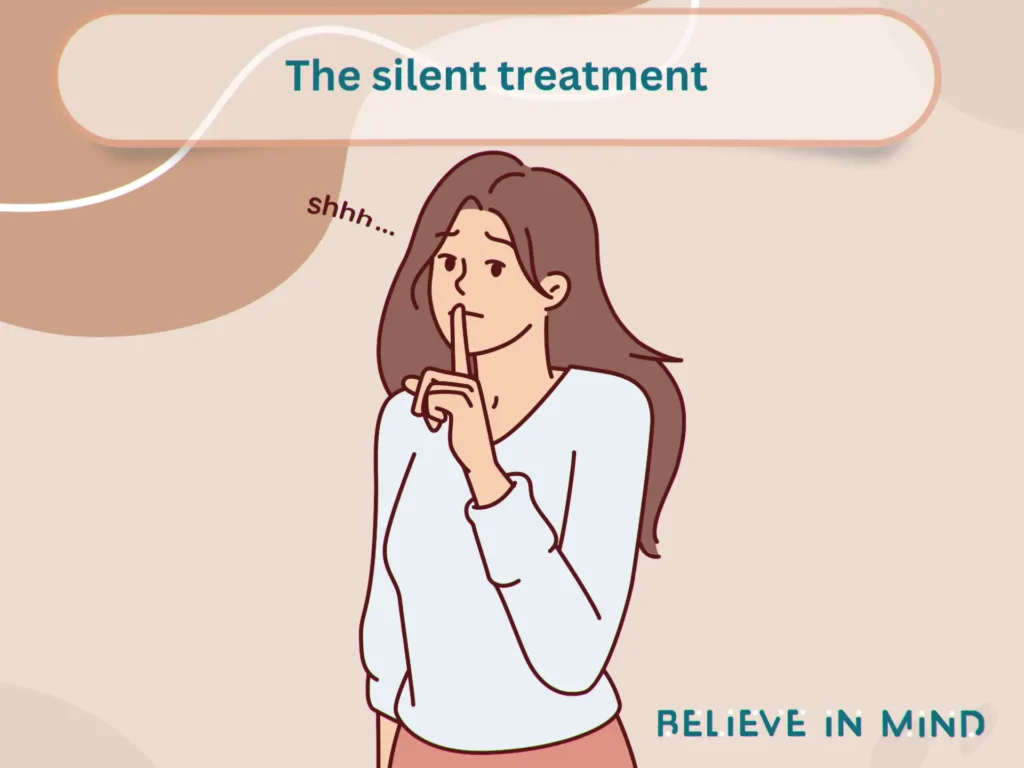
Emotional manipulation through the silent treatment can have detrimental effects, especially for those emotionally dependent on the manipulator. This tactic aims to isolate and undermine an individual’s self-confidence by refusing communication verbally, in writing, or through any means, be it in person, over the phone, or via text messages or emails. The duration of the silent treatment can vary from a few hours to prolonged periods spanning days or even weeks.
The reasons behind the silent treatment can be varied. Anger, punishment, or a desire for control may drive the manipulator’s actions. Regardless of the motive, the silent treatment constitutes emotional abuse with potentially devastating consequences for the victim’s well-being.
If you find yourself on the receiving end of the silent treatment, know that you are not alone. Millions of individuals endure this form of abuse annually. However, there are steps you can take to cope with the situation and protect yourself from its harmful effects.
First and foremost, recognize that the silent treatment is a reflection of the manipulator’s need for control, not a flaw in you. Avoid internalizing blame or taking responsibility for the manipulator’s behavior.
Setting clear boundaries is crucial. Communicate to the manipulator that their behavior is unacceptable and that you require healthy communication. Express your need for open and respectful dialogue.
Seeking support from loved ones, such as friends, family members, or a therapist, can provide solace and guidance during this challenging experience. Sharing your feelings and experiences can help alleviate the sense of isolation and contribute to developing effective coping strategies.
Remember, you are not accountable for the manipulator’s actions. You deserve respect and should never tolerate abusive behavior. If the silent treatment causes significant distress, don’t hesitate to seek professional assistance. Empower yourself to break free from the cycle of manipulation and reclaim your emotional well-being.
2. Emotional blackmail
is a form of manipulation that involves using guilt, fear, or other negative emotions to control another person. Manipulators often use emotional blackmail to get what they want, such as money, attention, or control over another person’s behavior. They may make you feel guilty if you don’t do what they want, threaten to withdraw their love or affection if you don’t comply with their demands, or make you feel like you’re the only one who can make them happy.
Emotional blackmail can have a devastating impact on the victim’s self-esteem, confidence, and mental health. It can lead to isolation, financial problems, and even physical health problems. In some cases, emotional blackmail can even lead to suicide.
If you are being subjected to emotional blackmail, it is important to take action to protect yourself. The first step is to recognize that you are being manipulated. Once you have recognized the manipulation, you can start to set boundaries and maintain them assertively. You should also seek support from trusted friends, family, or professionals.
It is important to remember that you are not alone. Millions of people are subjected to emotional blackmail every year. There is help available, and you can overcome this manipulation.
Read more

3. Playing the victim
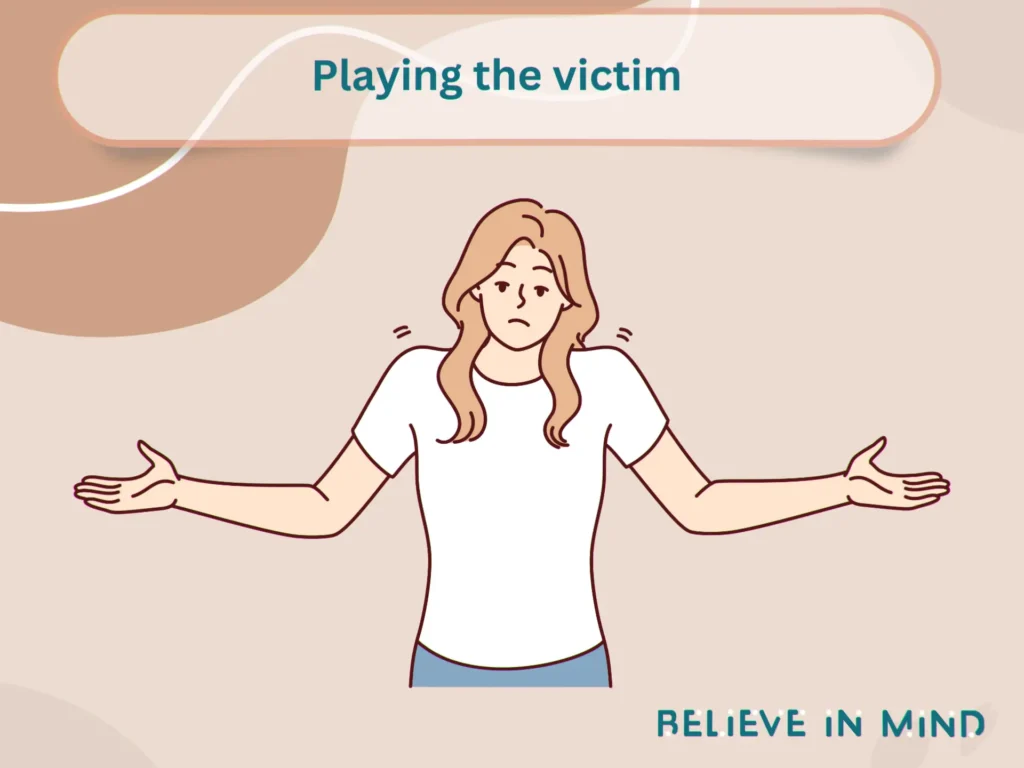
Manipulators are often skilled at playing the victim in order to gain sympathy and control over others. They may constantly portray themselves as the victim, even when they are clearly in the wrong, in order to manipulate the emotions of others and make them feel guilty or responsible for their behavior. They may blame others for their own mistakes or misfortunes, refusing to take responsibility for their actions and instead making others feel like they are the cause of their problems. Guilt trips are a common tactic used by manipulators to make others feel responsible for their feelings, often using emotional blackmail to pressure them into doing what they want.
Additionally, manipulators may exaggerate or fabricate stories to gain sympathy and support from others, playing on their emotions to get what they want. They may also use tears or other emotional displays to make others feel sorry for them and more likely to give in to their demands. By playing the victim, manipulators are able to gain control over others and avoid taking responsibility for their own actions, while also gaining sympathy and support from those around them. It is important to recognize when someone is playing the victim and not be manipulated by their tactics.
4. Triangulation
In the realm of manipulation, triangulation stands out as a cunning strategy employed to sow discord and foster isolation. It’s a tactic that hinges on playing individuals against each other, effectively driving a wedge and creating an environment of distrust and suspicion. This calculated maneuver is often executed through insidious whispers, the covert sharing of personal information, or the deliberate spreading of negative remarks. By skillfully manipulating these dynamics, the manipulator seeks to maintain a firm grip on control and deflect any attention from their own questionable behavior.
Triangulation extends its reach beyond personal relationships, infiltrating families and even professional environments, leaving a trail of fractured bonds in its wake. The manipulator, with a keen eye for vulnerability, exploits existing conflicts or skillfully plants seeds of discord, pitting individuals against one another. This calculated strategy serves to isolate the targeted individual, making them feel as if they are the sole confidante of the manipulator’s secrets. This isolation tactic further complicates their ability to seek support or establish healthy connections, effectively keeping them trapped in a web of manipulation.
Recognizing triangulation as a manipulative tactic is the first step towards breaking free from its insidious grasp. Should you find yourself entangled in this web of deceit, it’s crucial to avoid being ensnared in one-on-one interactions with the manipulator. When unavoidable, assert your boundaries with unwavering resolve and make it unequivocally clear that their manipulative tactics will not be tolerated. Seeking support from trusted individuals, be they friends, family, or professionals, can provide a lifeline of strength and guidance. Together, you can devise strategies to counter the manipulator’s influence and reclaim your autonomy.
Breaking free from the clutches of triangulation requires courage and resilience, but it’s a journey worth embarking on. By recognizing the manipulation, establishing boundaries, and seeking support, you can reclaim your sense of self and forge healthy relationships built on trust and mutual respect. Remember, you hold the power to reshape your narrative and emerge from the shadows of manipulation, reclaiming your rightful place in a world free from deceit.
5. Love bombing
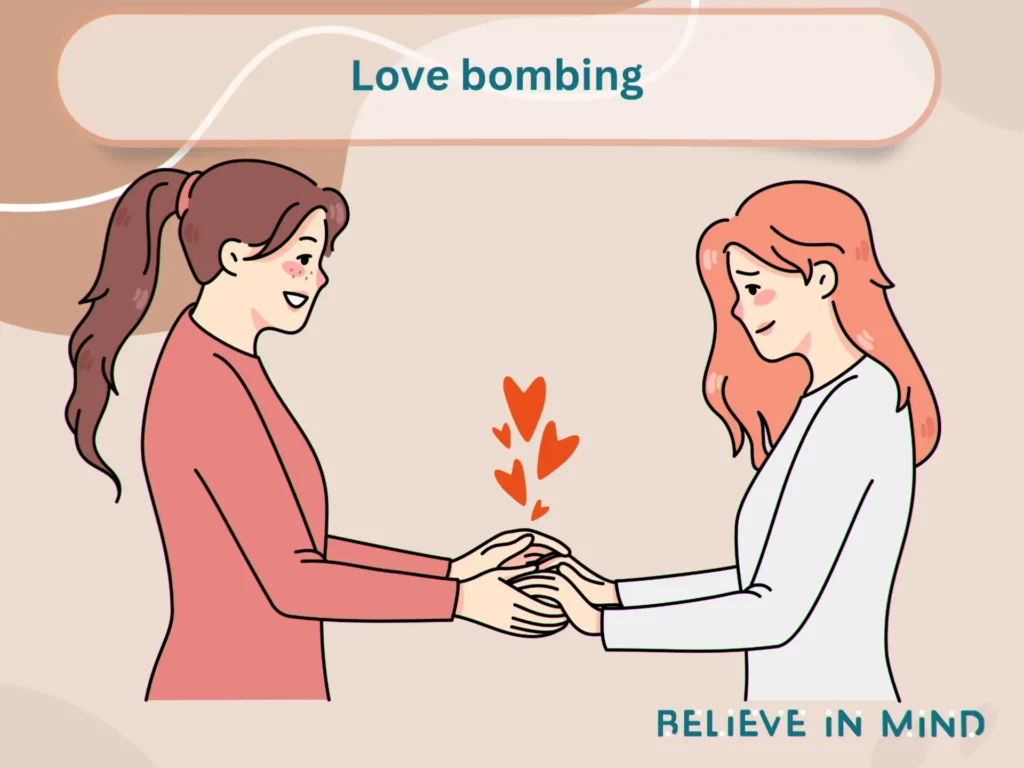
is a calculated and insincere display of extreme affection and attention showered upon a person by a manipulator. It is a deliberate tactic employed to gain trust, control, and influence over the recipient. This excessive and overwhelming display of affection often feels too good to be true and aims to sweep the victim off their feet, making them more vulnerable and susceptible to manipulation.
Manipulators employ love bombing as a strategic move to establish a quick and intense connection with their target. They may lavish the victim with compliments, gifts, and constant attention, creating an illusion of a perfect and ideal relationship. This intense affection is often accompanied by declarations of deep love and commitment, which can be overwhelming and intoxicating for the unsuspecting recipient.
However, the intention behind love bombing is not genuine love or affection. It is a carefully orchestrated act designed to disarm and captivate the victim, making them more receptive to the manipulator’s influence and control. Once the manipulator has gained the victim’s trust and emotional attachment, they may begin to subtly manipulate and exploit them for their own selfish purposes.
It is crucial to recognize love bombing as a manipulative tactic and to be cautious of individuals who display such excessive and sudden affection. Genuine relationships are built on mutual respect, trust, and open communication, not on overwhelming displays of affection that feel too good to be true. If you find yourself in a situation where someone is love bombing you, it is important to maintain a healthy level of skepticism and to set clear boundaries to protect yourself from potential manipulation and emotional harm.
6. They gaslight you
Gaslighting is a manipulative tactic that aims to undermine your trust in your own judgment, memory, and perception. Manipulators use gaslighting to gain and maintain control over their victims by making them question their reality. They may deny or distort the truth, plant false information or memories in your mind, or make you feel like you’re going crazy.
Gaslighting can have a devastating impact on the victim’s self-esteem and mental health. It can make them feel isolated, confused, and anxious. They may also start to doubt their own worth and abilities. In severe cases, gaslighting can even lead to depression, anxiety, and post-traumatic stress disorder (PTSD).
If you’re being gaslighted, it’s important to seek help from a trusted friend, family member, or therapist. They can help you validate your experiences and develop strategies for coping with the manipulation. You may also want to consider keeping a journal to document the gaslighting incidents. This can help you to see the pattern of abuse and to identify the specific tactics that the manipulator is using.
Remember, gaslighting is a form of abuse and you don’t have to tolerate it. There are people who can help you. You’re not alone.
7. They isolate you
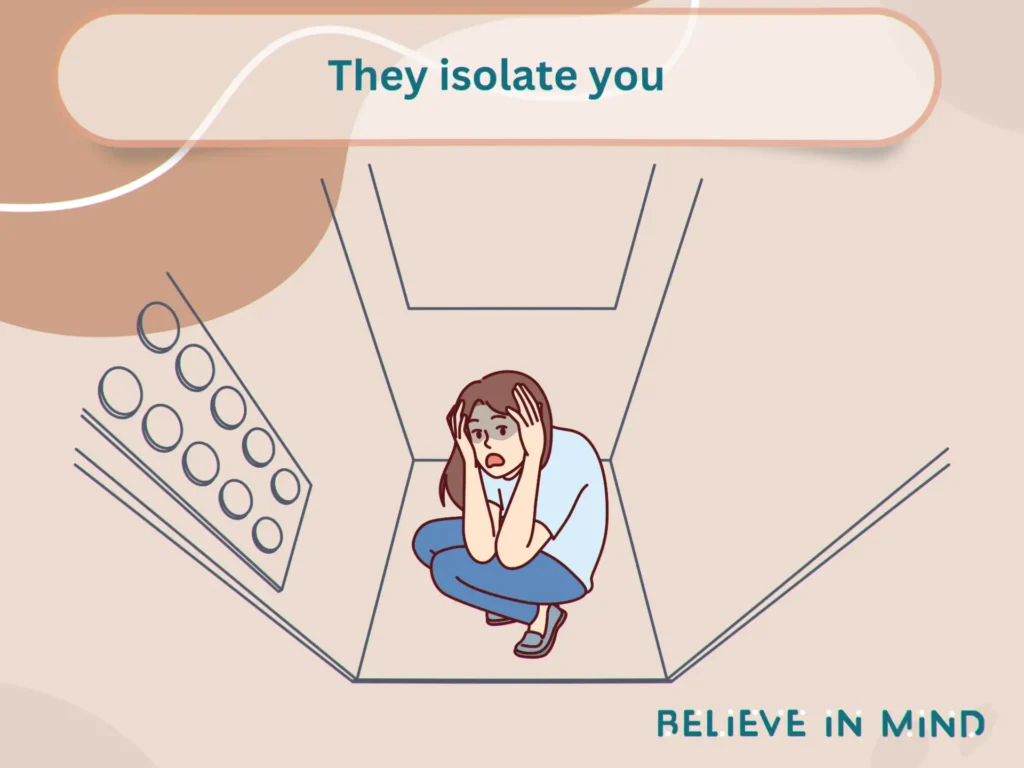
Manipulators often try to isolate their victims from others in order to maintain control. They may do this by trying to control who you spend time with, making you feel guilty or ashamed if you spend time with others, trying to sabotage your relationships with friends and family, or trying to convince you that you don’t need anyone else and that they are the only person who truly cares about you.
Isolation can have a devastating impact on a person’s mental and emotional health. It can lead to feelings of loneliness, depression, and anxiety. It can also make it more difficult to resist the manipulator’s influence.
If you are being isolated by a manipulator, it is important to seek help from trusted friends, family, or a therapist. They can provide you with the support you need to break free from the manipulator’s control.
Here are some tips for dealing with a manipulator who is trying to isolate you:
- Set boundaries. Let the manipulator know that you are not comfortable with them trying to control who you spend time with or what you do.
- Don’t feel guilty. You have a right to spend time with the people you care about.
- Don’t let them sabotage your relationships. Talk to your friends and family about what is going on and ask them for their support.
- Remind yourself that you are not alone. There are people who care about you and want to help you.
Breaking free from a manipulator’s control can be difficult, but it is possible. By following these tips, you can protect yourself from the dangers of manipulation and reclaim your life.
8. They leave you feeling empty
Emotional vampires. People who suck the life out of you, leaving you feeling drained, empty, and questioning your self-worth. They may make you feel like you’re always giving and never receiving, like you can’t be yourself around them, and like you’re constantly walking on eggshells.
Manipulators are skilled at eroding your self-esteem and making you doubt your own worth. They may constantly criticize you, put you down, or make you feel like you’re not good enough. This can lead to a loss of confidence and a sense of insecurity, making you more susceptible to their manipulation.
You may feel like you’re constantly trying to please the manipulator and that you can never do enough. No matter how hard you try, they always seem to find fault with you. This can lead to a cycle of self-blame and guilt, making it even harder to break free from their control.
In addition to the emotional damage, manipulation can also have a physical impact on your health. You may experience headaches, stomachaches, or other physical symptoms. You may also have difficulty sleeping or eating. Prolonged exposure to manipulation can even lead to more serious health problems, such as depression and anxiety.
If you’re being manipulated, it’s important to seek help from a trusted friend, family member, or therapist. They can provide you with the support you need to break free from the manipulator’s control. You may also want to consider seeking legal help, as manipulation can sometimes be a form of abuse.
Remember, you are not alone. Millions of people have been through what you are going through. There is help available, and you can get through this.
Strategies for Self-Protection: Navigating Manipulative Interactions
In the realm of human interactions, encountering individuals with manipulative tendencies can be an unfortunate reality. To navigate these complex situations effectively, adopting self-protective strategies is paramount. Establishing firm boundaries serves as a crucial first step. Clearly define the behaviors you deem acceptable and those you won’t tolerate. Be assertive in upholding these boundaries, prepared to end conversations or remove yourself from situations that breach your limits.
Recognizing and acknowledging your emotions is another key component in preventing manipulation. Manipulators often exploit emotional vulnerabilities, aiming to evoke feelings of guilt, shame, or obligation. Cultivate self-awareness to identify these emotions as they arise. Remind yourself that you have inherent value and that negative emotions should not dictate your actions.
Seeking support from trusted individuals or support groups can provide invaluable assistance in navigating manipulative interactions. Share your experiences with friends, family members, or professionals who can offer guidance and validation. Connecting with others who have faced similar challenges can foster a sense of community and diminish the isolating effects of manipulation.
Lastly, prioritizing self-care is essential for maintaining resilience against manipulative tactics. Prioritize your physical and mental well-being, ensuring adequate rest, nutritious meals, and regular exercise. Engage in activities that bring you joy and relaxation, nurturing your sense of self-worth and reducing your susceptibility to manipulation.
Remember, safeguarding yourself from manipulation involves a combination of assertiveness, emotional awareness, seeking support, and self-care. By implementing these strategies, you empower yourself to navigate challenging interactions with greater confidence and well-being.
Seeking support: when professional intervention becomes necessary
In some cases, dealing with a manipulator can be overwhelming and may require professional intervention. Seeking help from a licensed therapist or counselor can provide you with the necessary tools and strategies to navigate the situation effectively. A professional can offer an objective perspective, validate your experiences, and help you develop coping mechanisms to regain control of your life. They can also assist you in setting boundaries, recognizing unhealthy patterns, and building a support system.
It is important to recognize when the situation is beyond your ability to handle alone. Some signs that professional help may be necessary include:
- A persistent feeling of fear, anxiety, or depression;
- Difficulty maintaining healthy relationships;
- A decline in physical or mental health;
- An inability to function effectively at work or school;
- A sense of hopelessness or despair
If you are experiencing any of these symptoms, it is crucial to seek professional help. A therapist can provide you with the support and guidance you need to break free from the manipulator’s control and reclaim your life.
When seeking professional help, it is important to find a therapist who is experienced in dealing with manipulation and its effects. You may want to ask for recommendations from friends, family, or your primary care physician. You can also search for therapists in your area who specialize in manipulation on websites such as Psychology Today or GoodTherapy.
Once you have found a therapist, it is important to be open and honest about your experiences. This will help the therapist to develop an effective treatment plan that meets your individual needs. Therapy can be a challenging process, but it can also be incredibly rewarding. With the right help, you can break free from the manipulator’s control and reclaim your life.
References
- The Art Of Manipulation: How to Get Anybody to Do What You Want by Omar Johnson
- Playing the victim From Wikipedia, the free encyclopedia
- Triangulation in psychology: How does it affect our relationships? By Bonnie Evie Gifford,
- Love bombing From Wikipedia, the free encyclopedia
- Gaslighting From Wikipedia, the free encyclopedia

Let’s boost your self-growth with Believe in Mind.
Interested in self-reflection tips, learning hacks, and knowing ways to calm down your mind? We offer you the best content which you have been looking for.